The Challange
Delivering net-zero energy systems requires a diverse portfolio of renewable technologies. While wind and solar have experienced rapid growth, challenges remain around intermittency, energy security, grid resilience, and the decarbonisation of coastal and offshore activities.
Many coastal communities, marine industries, and offshore operations continue to rely on costly or carbon-intensive energy sources.
Wave energy represents an opportunity to address these challenges by harnessing a large and predictable renewable resource that remains largely untapped.


Why now?
Several factors are converging to create favourable conditions for wave energy development:
Governments and industries worldwide are investing heavily in technologies that can accelerate the transition to net-zero emissions.
Eletricity demand is projected to double by 2050 driven by electrification of transport, heating, industrial manufacturing, and digital infrastructure.
Recent volatility in global energy markets has highlighted the importance of diverse, domestic energy sources. Coastal nations are increasingly seeking resilient, locally available renewable resources.
The rapid growth of offshore wind has created infrastructure, expertise, supply chains, and regulatory frameworks that can help accelerate wave energy deployment.
Market potential
The global wave energy resource is vast. Many coastal regions possess wave resources capable of contributing meaningful amounts of clean electricity to local and national energy systems.
Independent research has estimated the total addressable market that can be targeted by wave energy to be 180 GW globally, with 6.4 GW in the UK, by 2050 . This would be primarily in delivering utility scale electricity to national electricity grids. However, there is also shorter term opportunities in high value niche markets, to provide power in:
remote energy markets
maritime and coastal markets
offshore defence and security markets

Staged development roadmap
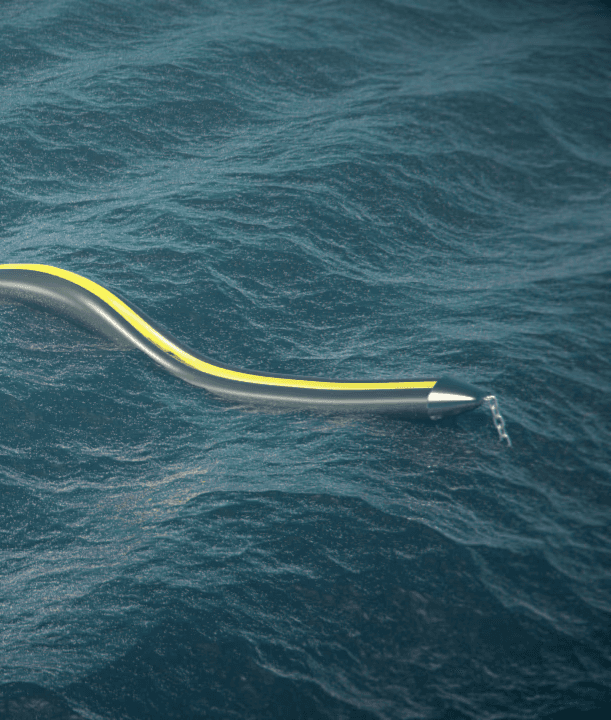
The Anaconda is progressing through a staged technology development process.
Stage 1: Concept Development - 1:25 scale model tank tests demonstrated power capture performance and fundamental operating principals
Stage 2: Design Optimisation - Further tank testing, investigating a range of configurations and operating states, with a representative power-take off and mooring system, alongside testing of a 1:12 scale dry power-take off. This current program aims to improve performance, reduce risk, and demonstrate readiness to progress to sea trial.
Stage 3: Scaled Demonstration - 1:4 scale sea trial. The next stage after the current program, this is a key step towards demonstrating survivability, reliability and performance in real sea conditions.
Stage 4: Commercial Scale Device Demonstration - Following successful prototype validation, the technology will be deployed at full sacle to demonstrate operational and economic performance.
Long term global trends
Wave energy sits at the intersection of several major global trends:
Net-zero transition
Energy security
Offshore industrial growth
Maritime decarbonisation
Electrification of infrastructure
Growth in blue economy sectors
These trends are expected to drive continued interest in technologies capable of delivering reliable, low-carbon energy solutions.
